



Tour Overview
The crystal clear rivers of Bhutan are one of the country’s best kept open secrets. Fed by the glacial-melt of the Eastern Himalayas, six major rivers (Wang Chhu, Sunkosh, Puna Tsang Chhu, Mangde Chhu, Kuri Chhu and Dangme Chhu and their tributaries), have been scouted for kayaking and rafting.
They cut through high valleys and low plains to meet up with the Brahmaputra River in India. The pristine natural setting and the sheer variety of the rivers’ courses provides a unique opportunity to explore Bhutan’s beautiful wilderness. Adventurous travellers will not be disappointed by the rugged, untamed waterways of Bhutan. The rivers are plentiful with strong currents varying between slow, gentle flows in some places – and powerful, raging torrents can be found throughout the country. Although adventure sports and tourism are relatively recent introductions to Bhutan, they are rapidly gaining in popularity.
The river courses available in Bhutan offer something for all visitors, regardless of experience: There are easy routes for beginners and hair-raising runs for the veterans. The best time for rafting and kayaking is from March to April and November to December.
Safety
We will do everything to ensure that you enjoy the adventure while minimizing the risks.
Tour Itinerary
Fly into Paro by Drukair flight (Royal Bhutan Airline) or Bhutan Airlines. After immigration and customs formalities, you will be received by a Bhutan tour guide from Access Bhutan Tours & Treks and driven to your hotel in Paro.
After checking into your hotel and refreshment visit the following:
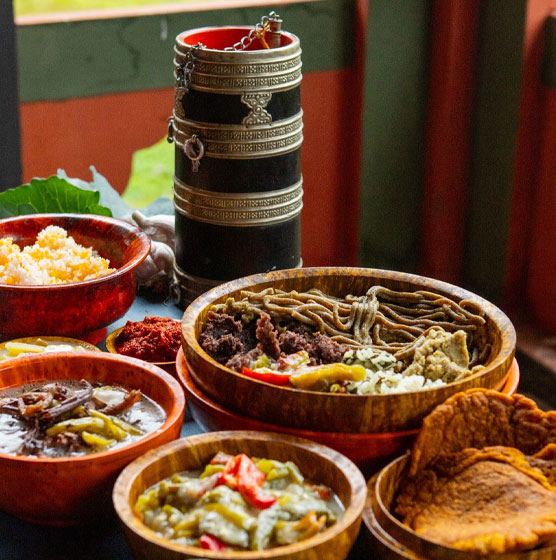
- Farm houses in Paro Valley and a visit to a farm house offers a good glimpse into the lifestyle of a farmer and where you can enjoy authentic Bhutanese lunch.
- Kyichu temple,one of the 108 temples built in the 7th century by the Tibetan King Songsten Gampo. The story goes that a giant demon lay across the whole area of Tibet and the Himalayas and was preventing the spread of Buddhism. To overcome her, King Songtsen Gampo decided to build 108 temples, which would be placed on all the points of her body. Of these 108 temples, 12 were built in accordance with precise plans. Thus, it happened that in about the year AD 638 the temple of Jokhang in Lhasa was built over the very heart of the demon.
- Rinpung Dzong, built in 1645 to defend the valley against Tibetan invaders. The Dzong is now being used as an administration center and school for monks.Then walk down to Rimpung Bridge (Traditonal Bridge), oldest bridge in Bhutan.
In the evening stroll around Paro town and you may visit local handicraft stores.
Overnight at a hotel in Paro.
Distance: 54 km & estimated driving time: 1 hour
After breakfast, you will travel to Thimphu valley which will take you through Chunzom (confluence of Pachu- the river flowing through Paro valley & Wangchu –the river flowing through Thimphu valley). On the way, visit Tachog Lhakhang (temple) , this 14th century temple located on the base of a mountain across the Pa chu on the Paro-Thimphu highway, is a must visit temple in the Paro valley. Built by the great master architect Thangtong Gyalpo, the temple houses some unique statues. To get to the temple one may actually walk over the iron chains that spans over the Pa chu ( Paro river).
After crossing Chunzom which is the confluence of Paro and Thimphu rivers, the drive will take you along the Wangchu ( Thimphu river) to Thimphu valley.
After checking into your hotel, you will visit the following:
- Traditional Bhutanese paper making factory. The handmade paper making in Bhutan stemmed from the age old tradition originated in 8th century of Bhutanese history. The handmade paper constitutes as valuable National heritage of Bhutanese cultural identity and is preserved through all the ages. The Traditional paper is recognized and held high esteem both in home and outside world. Jungshi Paper Factory was established in November 1990 as an undertaking of the Royal Government of Bhutan. The unit now boasts as a major and sole dealer in handmade paper and its products.
- National Textile Museum which is a good place to see the art of traditional weaving being kept alive and preserved through exhibition and has a good collection of old textiles which are rich in colors and designs.You will also see people weaving with intricate designs.
- School of Traditional Painting of Arts and Crafts where students undertake a six-year course on the 13 traditional arts and crafts of Bhutan.
- Simply Bhutan– A living museum of rural life which provides visitors and tourists with fascinating insights into the Bhutanese material culture and way of life.
After lunch at Simply Bhutan enjoying the traditional Bhutanese lunch drive for about 30 minutes to the base camp of Tango Monastery and hike up to the Monastery. The walk up to the Monastery is through the forest filled with Rhododendron flower trees which will be in full bloom during April month. Tango Monastery is the center for higher studies for monks. The view from Tango Monastery is breathtakingly beautiful. You will experience complete peace and serenity in this area. After visiting the monastery, walk back to the road and then drive back to Thimphu .
In the evening visit Craft Bazaar where craftsmen and artisans from across the country display and sell their handicrafts.
Overnight at a hotel in Thimphu
Distance: 71 km & estimated driving time: 2 ½ hours
After breakfast, travel to Punakha & Wangdue through Dochula Pass 3140 m). In the clear spring sky, you can enjoy the panoramic view of the Himalayan Mountain ranges. . Then pass by the beautiful 108 chortens built on the hill by Her Majesty Ashi Dorji Wangmo Wangchuck (Queen Mother of Bhutan) for the security and well being of His Majesty, the King of Bhutan.
You will also visit Druk Wangyal Lhakhang (monastery) which was built by Ashi Dorji Wangmo Wangchuck ( the Queen Mother of Bhutan) as a tribute to His Majesty the fourth King of Bhutan, Jigme Singye Wangchuck and armed forces after His Majesty led a successful operation against Indian militants who had occupied certain areas of Bhutan. The gallery of the Druk Wangyal Lhakhang has beautiful murals depicting some of the important events in the reigns of the Kings of Bhutan. This is a unique feature of this monastery that no other monastery in Bhutan has.
Then drive onto Punakha. Punakha has been inextricably linked to some of the most momentous events in the Bhutanese history and deserves its reputation as one of the most beautiful and significant regions at the heart of Bhutanese culture. Punakha had served as the capital of Bhutan from 1637 till 1907 and the 1st National Assembly was held there. The dzong is historically important and stands as the symbol for a unified Bhutan.
On the way, stop for lunch at Metsina village and then visit the Devine Madman’s Monastery-Chhimi Lhakhang, famously known for its fertility shrine, where one can receive a special fertility blessing.
Then visit the Punakha Dzong, located on the island of the Pho - Chu (male river) and the Mochu (female river). The dzong was built in 1637 by Zhabdrung Ngawang Namgyal (the person who unified Bhutan) to serve as the religious and administrative seat of the region. It was here that the dual system of government was introduced in the 17th century and in 1907, enthroned the first King Gongsar Ugyen Wangchuck. Damaged over the centuries by four catastrophic fires and an earthquake, the dzong has been fully restored in the recent years by the 4th King Jigme Singye Wangchuck. At the dzong, you can see the highest standards in woodwork.
Overnight at a hotel in Punakha.
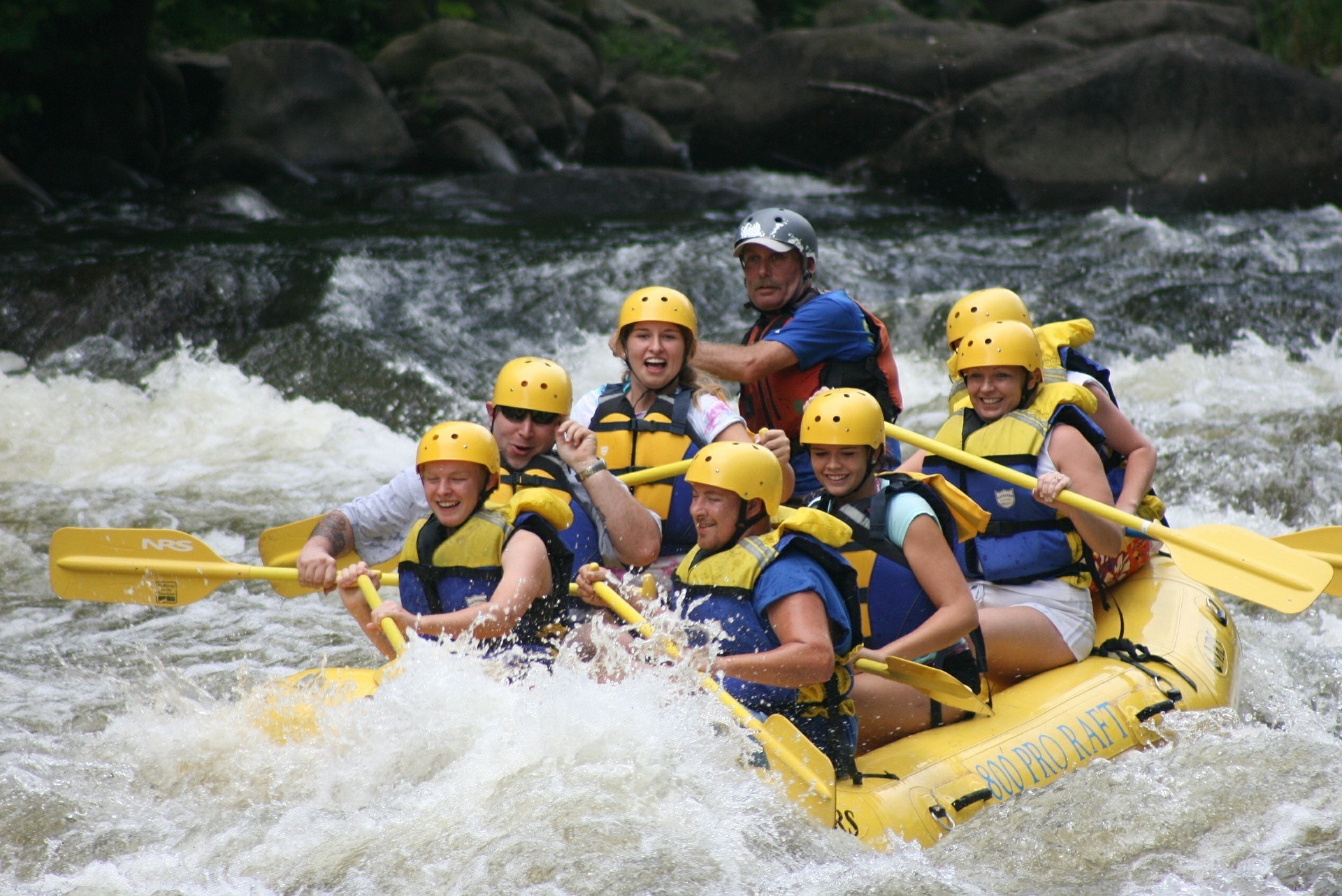
After breakfast, an exciting rafting tour awaits you. Following a short drive you arrive at the river and, after a fully safety briefing, you take to your raft for a ‘soft’ rafting experience down the Pho-Chu (Male River). You will need to do a little paddling and you may get a little we but it will all be worthwhile as this journey takes you through a wonderland of secluded scenic beauty. You drift along to Punakha Dzong, located on an island in the middle of the rivers. Built in 1637 the Punakha Dzong served as a religious and administrative centre for the region. Currently the Dzong is the winter residence of the Holy Monk Body of Bhutan. This rafting tour is expected to last 3-4 hours.
After a picnic lunch on the river side, you drive through the upper Punakha Valley passing through traditional villages and farmlands you will take a short hike through farmhouses to the beautiful Khamsum Yuelley Namgyal Lhakhang (temple) built by Ashi Tshering Yangdon Wangchuck (the Queen Mother of Bhutan) for peace and stability in this ever-changing world. This temple is situated on the hilltop overlooking the valley below. The leisurely walk up to the temple would take about an hour. Visit the temple and also enjoy the breathtakingly beautiful view from there.
Dinner and overnight at a hotel in Punakha.
Please contact us for any of these arrangements.
After breakfast,yet another exciting day awaits you. This good stretch is for those who are apprehensive about going on a whitewater trip. Start your day by taking an hour or so hiking up to the temple at Nyezengong and then floating down the scenic Mo Chhu past the Punahka Dzong and to the take out at the high school. It is recommended to finish by mid afternoon, as an upstream wind is common most afternoons.
In the evening you may visit Rinchengang village in Wangduephodrang where you will take a short hike through the village and have free interaction with the villagers. Round trip hike will take about 1 hr. At the same time you can view the ruins of Wangdue Dzong (the Dzong was razed to the ground by fire in 2012).
Dinner and overnight at a hotel in Punakha.
After breakfast drive to Thimphu and after lunch at Thimphu visit the following:
After breakfast , drive to Thimphu and after lunch visit the following:
- Takin Preserve, which houses the national animal the Takin that is only found in Bhutan. This is an extremely rare member of the goat family. Found in herds in the very high altitudes (13,125ft and over). They live on a diet of grass and bamboo. It can weigh as much as 550 pounds.
- Witness Archery gamewhich is National sport of Bhutan.
- Kuensel Phodrang and take a short leisure hike to the Kuensel Phodrang Nature Park and enjoy the full view of Thimphu Valley below.
- Centenary Farmers’ Market (open from Thu-Sun only):Most of the Thimphu’s population and many valley dwellers converge on the bustling weekend market, held by the side of Wangchu River. A wide range of foodstuffs and local arts and crafts are sold at the market, which runs from Friday afternoon till Sunday evening. A visit to the market provides great photo opportunities, as well as the chance to mingle with local people and perhaps buy souvenirs.
- Tashichhoe Dzong, a fortress of the glorious religion. It was built in 1641 by Zhabdrung Ngawang Namgyel and was reconstructed into present structure by the late King, His majesty Jigme Dorji Wangchuck in the year 1962-1969. It houses the secretariat building, the throne room and the office of the king, and the central monk body.
- National Memorial Chorten, chorten literally means ' seat of faith' and Buddhists often call such monuments the 'Mind of Buddha'. Meet the elderly local in circumambulation at the National Memorial Chorten.
Overnight at a hotel in Thimphu.
After breakfast drive to Paro for about 1 hour and hike up to Taktsang Monastery, also known as ‘Tiger’s Nest’. The climb up to the viewpoint will take around 1 ½ hours and from there you will enjoy a spectacular view of the monastery clinging to the side of the cliff. Stop for refreshment at the View Point Cafeteria.Then walk further up to the monastery which will take another 1 ½ hour. It is said that in the 8th century Guru Rinpoche flew on the back of a tigress from eastern Bhutan to this place and meditated in a cave here for 3 months. The principal Lhakhang (monastery) of the present monastic complex dates from 1692. Taktsang was damaged severely by fire in 1998 but has now been fully restored to its former glory.After visiting the monastery, walk back down to the road on the way stop for lunch at the view point cafeteria and then walk further down to the road point.
In the evening you may relax in the traditional hotstone bath.
Dinner and overnight at a hotel in Paro.
After breakfast, drive to the Paro airport and your Bhutan tour guide from Access Bhutan Tours will see you off at the Paro International Airport for your flight to your onward destinations.
End of the tour
Includes/Excludes
Cost Includes
- Bhutan visa fee
- Government royalty & taxes
- Dedicated English speaking tour guide
- Dedicated tour vehicle and driver
- 3-star accommodation (twin sharing)
- Daily 3 meals (B/L/D)
- Airport transfers
- Bottled water
- Stay at luxury resorts in Bhutan (Uma, Aman, Six Senses)
Cost Excludes
- Flights to and from Bhutan
- Personal expense/shopping
- Alcoholic Beverages
- 4 or 5 star accommodation (extra charges will apply)
- Travel insurance
- Entry fees to parks and monuments
- Tips for guide and driver